
Africa’s agriculture holds immense promise, but its full potential is constrained by the absence of well-structured, efficient markets. Without systems that promote transparency, coordination, and confidence, both producers and financiers struggle to operate at scale. As a result, a significant portion of the continent’s production force, particularly smallholder primary producers, remains excluded from formal finance.
A viable solution lies in strengthening market infrastructure that de-risks lending, builds trust, and unlocks finance. In this regard, warehouse receipt systems stand out as a critical enabler. They provide a credible framework through which stored commodities can serve as acceptable collateral for lending. By linking production to structured storage and verifiable value, such systems will help bridge the long-standing gap between agriculture and formal finance.
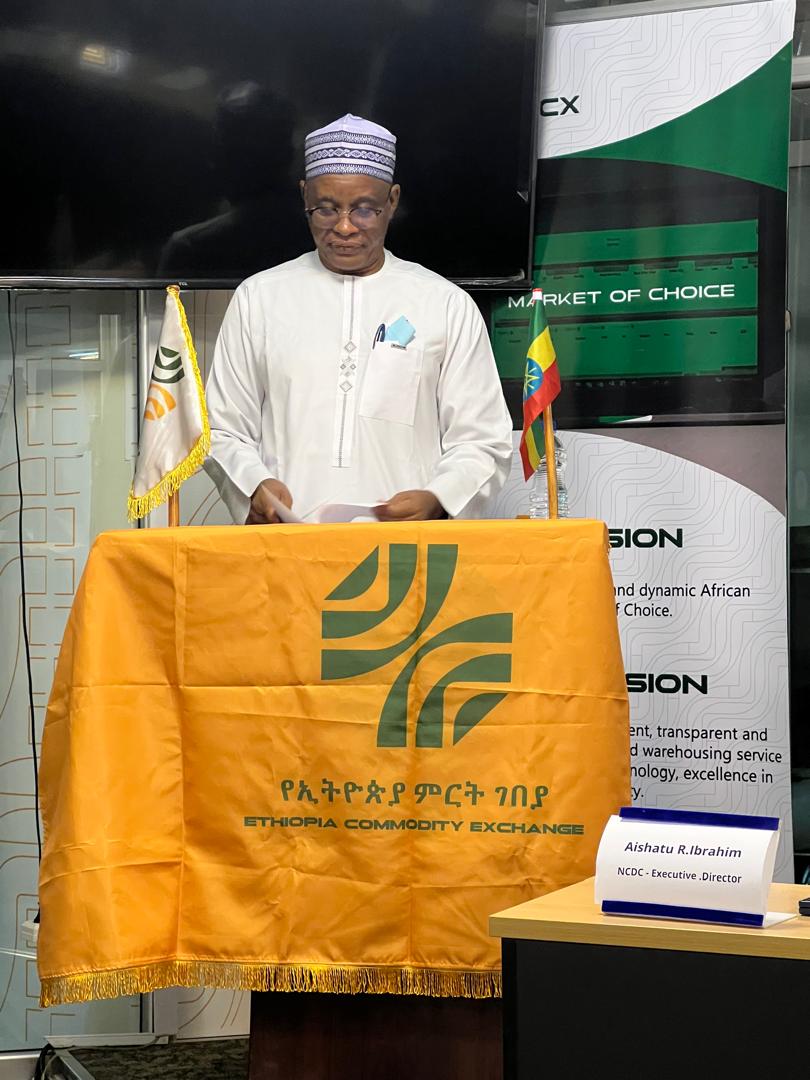
It is within this context that NIRSAL Plc undertook a study visit to the Ethiopian Commodity Exchange (ECX), one of Africa’s most established commodity market systems. The visit was part of a broader effort to deepen understanding of how integrated market systems, combining trading platforms with warehouse receipt frameworks, can drive agricultural transformation, particularly at the smallholder level.
The engagement is especially timely for Nigeria, coming on the heels of the Investments and Securities Act (ISA) 2025, which strengthens the legal framework for commodity exchanges and related market infrastructure, including warehouse receipt systems. For agriculture, this represents an important policy shift. By recognising structured commodity trading and collateralized storage systems within law, the Act opens new pathways for agricultural commodities stored in certified warehouses to serve as acceptable collateral for lending.
This has significant implications for primary production financing. Through warehouse receipt systems, producers are better positioned to access structured finance, reduce post-harvest losses, and participate more confidently in formal markets. In effect, the convergence of stronger policy backing, market infrastructure, and financing frameworks creates an opportunity to deepen trust and efficiency across Nigeria’s agricultural value chains.
Recognising that sustainable systems are built through collaboration, NIRSAL mobilised a cross-section stakeholders for the engagement. The delegation included representatives from the Nigeria Commodity Exchange (NCX), the North-Central Development Commission (NCDC), the Northern Nigeria Development Company, farmer groups, and the Central Bank of Nigeria (CBN). This multi-institutional participation underscores NIRSAL’s advocacy for a shared commitment to building a more coordinated agricultural ecosystem in Nigeria, one in which market structures, financing, and policy frameworks evolve in tandem.
The ECX experience also reinforces a broader lesson for the continent: Africa’s progress will be accelerated when institutions learn from one another and adapt proven systems to local realities. Efficient markets are not built overnight, they are cultivated through collaboration, consistency, and shared purpose.
For NIRSAL, this engagement is another demonstration of its commitment to supporting the evolution of agricultural markets, not in isolation, but in partnership with stakeholders who share a common vision. As Nigeria looks to enhance food security and strengthen its economic competitiveness, embedding warehouse receipt systems within broader market structures will be critical to unlocking sustainable finance for agriculture.